Why Marine-Grade 304 Stainless Steel Matters on a Grill
What 304 (18-8) stainless steel is, why it holds up to salt air and hard travel, and what else to check before you buy a grill you want to keep for years.

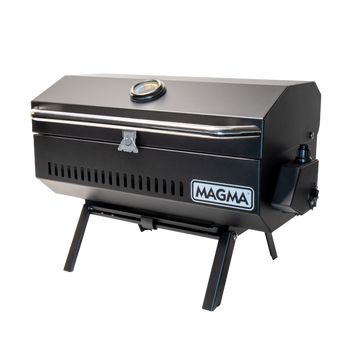
Most grills are built for a patio. Ours started on boats, where salt spray, humidity, and constant motion wear out ordinary gear in a season or two. That is why almost every Magma grill is built from marine-grade 304 stainless steel, also called 18-8. This post covers what that means, why it matters even if you never go near the ocean, and what else to check if you want a grill that lasts.
What 304 (18-8) stainless steel is
304 stainless is an alloy with roughly 18 percent chromium and 8 percent nickel, which is where the 18-8 name comes from. The chromium forms a thin protective layer on the surface that resists rust. The nickel makes that layer more stable and helps the steel hold up to salt and moisture.
Lower cost stainless grades, like the 400 series, use little or no nickel. They work fine in dry conditions, but they are more likely to show surface rust when they live near salt water or sit out in wet weather.
Why it matters off the water too
Salt water is the hardest test, but it is not the only one. Road salt in winter, rain at a tailgate, humidity at a lake cabin, and moisture trapped in a truck bed all go after cheaper metals. A grill built for a boat handles those without much thought.
Portable grills also take more physical abuse than a backyard grill. They get loaded, unloaded, bumped, and bounced down washboard roads. Stainless steel holds its shape and does not chip the way painted steel or porcelain coatings can.
Mirror polished, brushed, and powder coat
Our marine grills, like the Cabo and the Anacapa, use a mirror polished exterior. The smooth finish gives salt and grime less to grab onto, so it rinses clean more easily. The Crossover Single Burner Firebox uses brushed 304 stainless, which hides fingerprints and scuffs at camp. The Black Anacapa adds a black powder coat finish over the same 304 stainless body.
Look past the lid
A grill is only as durable as its weakest part. When you compare grills, check:
- Cooking grates: Ours are stainless steel, so there is no coating to flake off into your food.
- Interior parts: The burner and radiant plate take the most heat. Find out what they are made of, not just the outside.
- Mounts and hardware: Our mounts use 18-8 stainless steel and 356 anodized aluminum, so the bracket holding the grill holds up as well as the grill does.
- Parts: Every grill eventually needs a new igniter, valve, or grate. We sell replacement parts so you can fix a grill instead of replacing it.
Can stainless steel still rust?
It can show light brown surface spots, sometimes called tea staining, if salt or grease sits on it for a long time. That is not the steel failing, and it wipes off. Rinsing with fresh water after a day near salt water and keeping a fitted cover on the grill prevents most of it. Our stainless steel grill care guide walks through the full routine.
Frequently asked questions
Is 18-8 stainless steel the same as 304?
Is 304 stainless steel good for a grill?
Can I leave a stainless steel grill on my boat?
How long does a stainless steel grill last?
Shop marine grills or browse all portable grills.